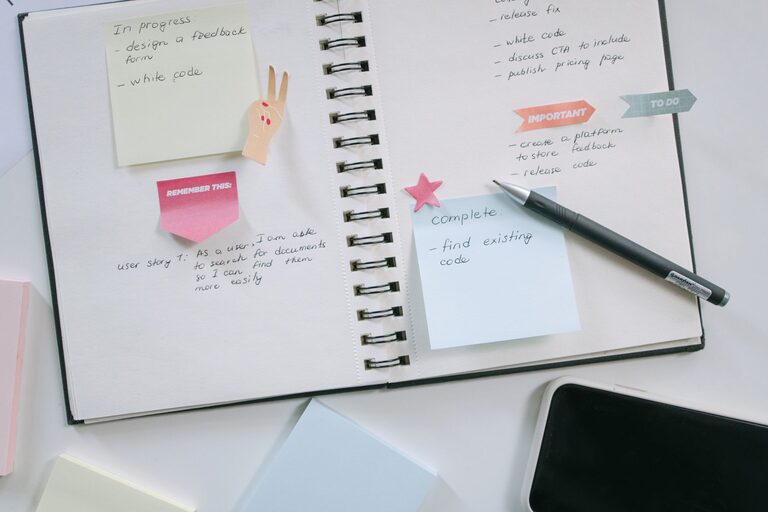

Choosing the right notebook can feel surprisingly important. Whether you want to jot down ideas, keep track of your schedule, or simply reflect on your day, the perfect notebook makes a big difference. But with so many options available, how do you find one you’ll actually use instead of letting it sit untouched?
In this post, we’ll walk through key factors to consider when choosing a notebook, helping you pick a companion that motivates and supports your daily habits.
Why Your Notebook Choice Matters
A notebook isn’t just a collection of pages—it’s a tool that encourages creativity, focus, and organization. When the notebook matches your preferences and needs, it’s easier to maintain consistent habits like journaling, planning, or note-taking. On the other hand, a poorly chosen notebook can feel cumbersome or uninspiring, leading to wasted money and missed opportunities.
Step 1: Identify Your Primary Purpose
Before shopping, take a moment to consider how you plan to use your notebook. Some common uses include:
– Daily journaling or reflection
– Task and project planning
– Creative writing or brainstorming
– Class or meeting notes
– Sketching and doodling
Knowing the main purpose helps narrow down your choices. For example, a sketchbook with thicker paper suits drawing, while a planner with dated pages keeps your schedule organized.
Step 2: Choose the Right Size
Notebooks come in all sizes, from tiny pocket versions to large sketchpads. Choose a size that matches your lifestyle:
– Pocket-sized (around 3” x 5” or A6): Great for quick notes and portability, fits easily in bags or pockets.
– Medium size (around 5” x 8” or A5): A popular size that balances portability with writing space.
– Large notebooks (8.5” x 11” or bigger): Offers ample space for detailed notes or sketches but less portable.
If you’re on the go often, a smaller notebook might be better. For desk use, a larger size works well.
Step 3: Pick the Paper Type and Quality
Paper quality affects writing comfort and durability. Consider these factors:
– Weight: Measured in GSM (grams per square meter). Heavier paper (80 GSM or above) is thicker and less likely to bleed through from pens.
– Texture: Smooth paper is ideal for ballpoint pens and pencils, while textured paper suits fountain pens or markers better.
– Color: White or cream-colored paper is standard. Cream is softer on the eyes, white is brighter and works well for scanning.
If you plan to use various pens or markers, test the paper if possible to avoid frustration.
Step 4: Decide on the Binding Style
The way a notebook is bound affects how it opens and lays flat:
– Spiral binding: Opens 360 degrees, easy to fold back. Great for writing on the go but can get caught in bags.
– Perfect binding (glued spine): Looks neat and professional but may not lay flat easily.
– Thread or stitched binding: Durable and allows the notebook to lay flat, common in hardcover notebooks.
– Disc binding: Modular system where pages can be added or removed, customizable but can be bulky.
Consider how you like to write: flat open or folded back.
Step 5: Consider Layout and Design
The internal layout influences how you organize your thoughts:
– Ruled (lined) pages: Good for writing and note-taking.
– Blank pages: Best for drawing, brainstorming, or freeform notes.
– Dot grid pages: A versatile option combining structure with freedom, often used for bullet journaling.
– Grid pages: Useful for diagrams, graphs, or technical notes.
Some notebooks include extras like:
– Page numbers
– Index or table of contents
– Pre-printed calendars or planners
– Pocket folders on the inside cover
Choose features that enhance your workflow without overwhelming you.
Step 6: Reflect on Cover Materials and Durability
Your notebook should withstand your lifestyle:
– Softcover: Lightweight and flexible, easier to carry but less protective.
– Hardcover: Offers better protection and a sturdy writing surface but adds bulk.
– Waterproof or synthetic covers: Durable and resistant to wear, great for outdoor use.
– Eco-friendly materials: If sustainability matters to you, look for notebooks made with recycled paper or vegan covers.
Also, consider whether you want your notebook to look professional, fun, or minimalist.
Step 7: Personalization and Extras
Adding personal touches can make your notebook more appealing to use:
– Monogram or custom cover designs
– Built-in bookmarks or elastic bands to keep it closed
– Pen holders or detachable accessories
– Numbered pages or guided prompts for journaling
Many brands offer customizable options to suit your style.
Step 8: Set a Realistic Budget
Notebooks vary widely in price, from inexpensive spiral notebooks to high-end premium journals. Decide what you’re comfortable spending. Remember: a pricier notebook doesn’t guarantee you’ll use it, and a simple one can be just as effective.
Try starting with a modest option. If you find you love writing or sketching regularly, you can invest in a higher-quality notebook later.
Tips for Making Your Notebook a Habit
– Keep it accessible: Store your notebook where you’ll see it often.
– Use it daily: Even a few lines a day build the habit.
– Combine it with a routine: Write in your notebook during morning coffee or before bed.
– Make it enjoyable: Use favorite pens, stickers, or colored tabs.
– Don’t worry about perfection: Your notebook is for you, so embrace imperfections.
Final Thoughts
The best notebook is one that fits your unique preferences and encourages regular use. By considering the purpose, size, paper, binding, layout, and your personal style, you can find a notebook that inspires creativity and organization every day.
Happy writing!
About the Author